How to Plan a Traditional Hindu Funeral
Planning a traditional Hindu funeral means understanding and respecting deep rituals. Nearly a billion people follow Hinduism. Its rites are designed to honour the dead and help their soul move on. In the UK, these rituals help keep culture alive. They also comfort the grieving family.
Organising a respectful goodbye needs care and good planning. This guide helps manage each step of a Hindu funeral. It lets families grieve without worrying about the details.
Key Takeaways
- Nine hundred million people practice Hinduism worldwide, marking it as the third largest religion globally.
- In Britain, over 70% of families favour cremation for funerals.
- Hindu funeral services typically last about 30 minutes, modified by the deceased's wishes and family preferences.
- The Hindu mourning period spans from 10 to 30 days, during which families often display pictures of the deceased adorned with floral garlands.
- The 'preta-karma' ceremony is performed on the 13th day to facilitate the deceased’s transition in the cycle of rebirth.
Understanding Hindu Beliefs About Death
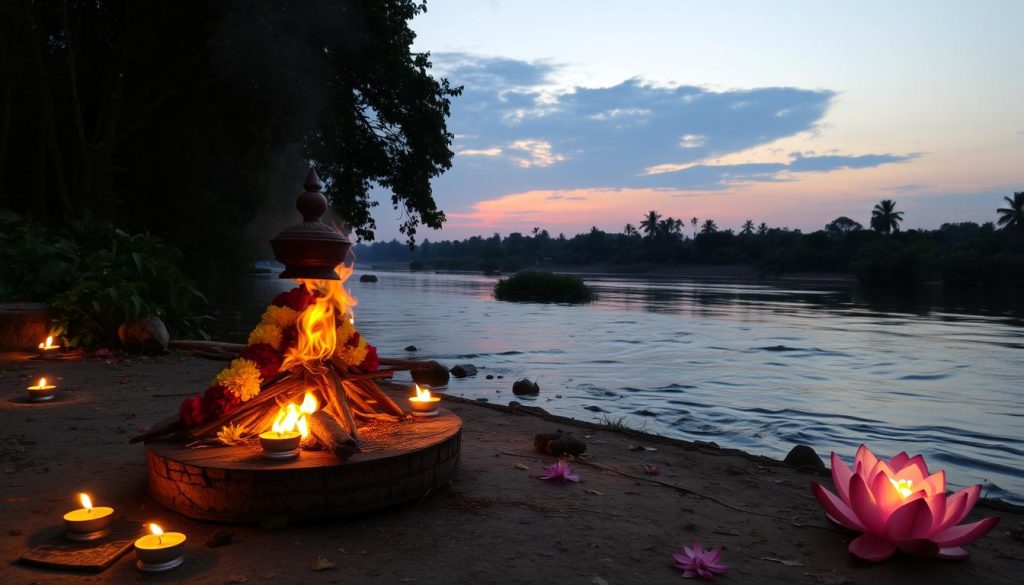
In Hinduism, death marks not an end, but a key turning point on a soul's journey. It is shaped by beliefs in reincarnation and karma. These ideas tell us that how we act now affects our future lives.
The Concept of Reincarnation and Karma
Reincarnation, or Samsara, means our soul enters a new body after death. This cycle stops only when Moksha, or freedom, is reached. Our next life's quality depends on our karma. This is the total of our actions' moral values. Good deeds can make the next life better, while bad ones can do the opposite.
The Role of Funeral Rites in Hinduism
Funeral rites in Hinduism are crucial, helping the soul on its path to Moksha. They include special chants and the giving of pinda (rice balls). These acts help the soul move on. The rites honor the dead and aid the living in their grief. They ensure the departed moves on well, which helps in getting a better next life.
| Aspect | Explanation |
|---|---|
| Reincarnation | The belief that the soul is reborn in a new body. |
| Karma | The cumulative ethical implications of an individual's actions, influencing future rebirths. |
| Funeral Rites | Rituals performed to support the soul's journey and ensure a dignified passage. |
Preparing the Body for a Hindu Funeral
Getting the body ready for a funeral in Hinduism is very important. It shows purification and respect. It's believed that the body carries the soul. It deserves great reverence, even in death. The rites help comfort those who are grieving. They help the departed soul move on smoothly to its next journey.
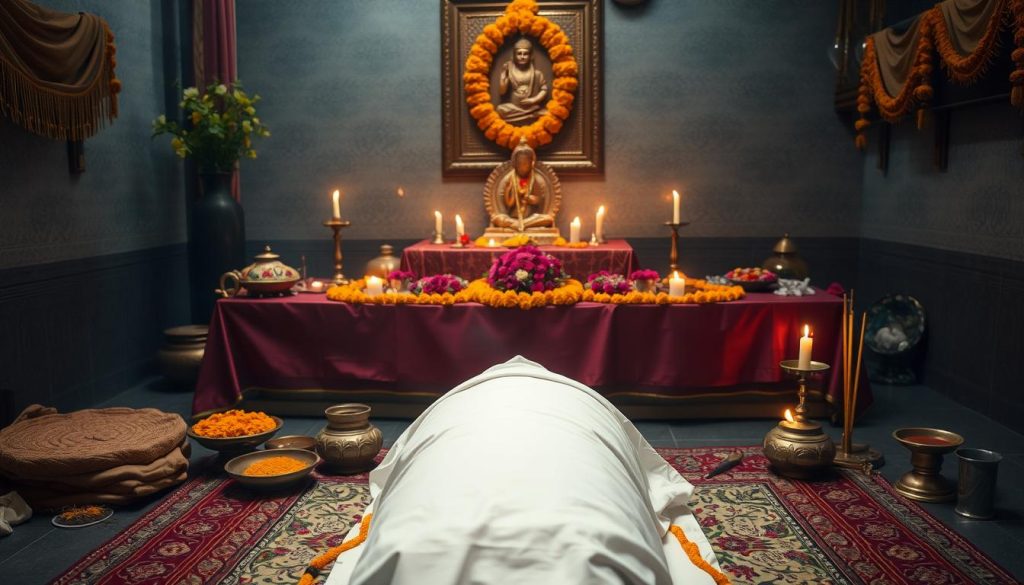
Washing and Anointing the Body
The first step is washing the body. This is done using milk, honey, and ghee. These are sacred items that cleanse and bless the body. The washing, known as abhyanga, is done by family and priests. They chant special prayers. Each item used in the washing means something special. For example, milk stands for purity and honey for everlasting sweetness.
Clothing and Positioning the Deceased
After cleaning, the body is dressed in white. This colour means purity and peace. The body is then placed with hands together, as if in prayer. This shows devotion and readiness for the next spiritual step. This pose is not just respectful. It also shows the soul giving itself to something greater. The white clothes remind us of the cycle of life and death, and the idea of being reborn.
Placing Garlands and Rice Balls
Lastly, flower garlands and pinda (rice balls) are placed around the body. These are very important. They help the soul on its next journey and show love and respect. The flowers, like marigold and jasmine, clean the air and help guide the soul. They are chosen for their sweet smell and sacredness.
Arranging the Hindu Funeral Service
Planning a Hindu funeral means paying attention to many steps. This makes sure customs are followed. Details like the venue and inviting family are key. Let's dive into what this involves.
Selecting a Suitable Venue
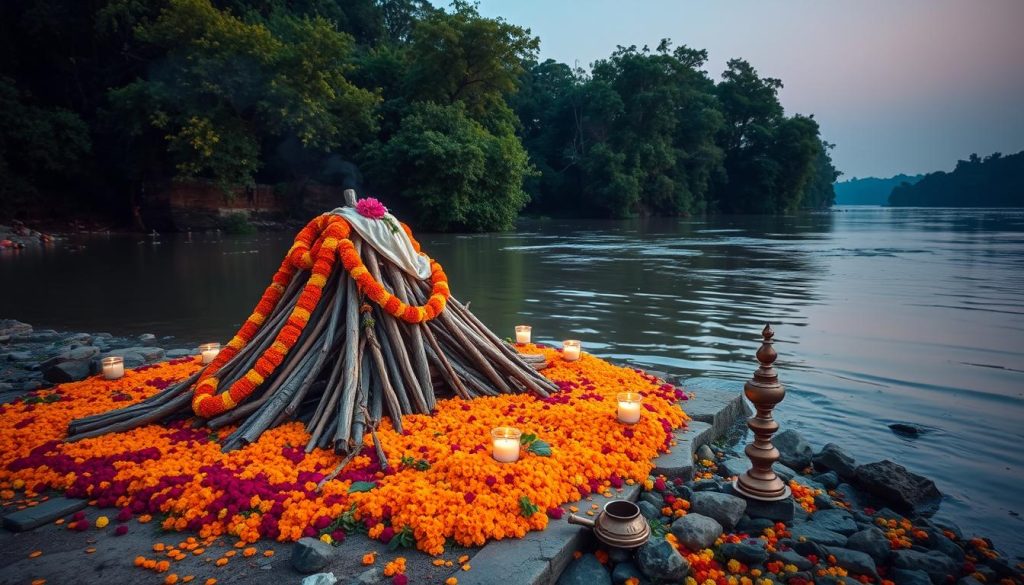
Where the funeral happens is very important. The place needs to be peaceful for rituals. Cremation is often chosen, which honours the creator god Brahma. Good places are crematoriums or places set up for such events.
Choosing a Hindu Priest or Officiant
It's crucial to have a Hindu priest who knows many languages. The priest helps with all the rites. They lead in saying mantras, prayers, and doing ceremonies.
Gathering Family and Friends
Having family and friends there is very supportive. People usually wear white, avoiding black. This brings everyone together in mourning and helps heal.
| Aspect | Details |
|---|---|
| Venue | Crematoriums, community centres |
| Attire | White or light-coloured |
| Priest's Role | Performing mantras, prayers, ceremonies |
| Notable Languages | Hindi, Punjabi, English |
| Funeral Flowers | Lotus flowers, chrysanthemums |
| Post-Funeral Rites | Scattering ashes in the Thames, Wye, or Soar |
| Cultural Significance | Communal mourning and remembrance |
The Hindu Funeral Ceremony
The Hindu funeral is full of tradition and belief in reincarnation. Each ritual is special, showing respect for the person who has died. These rites help guide their soul on its next journey.
The Importance of Prayers and Mantras
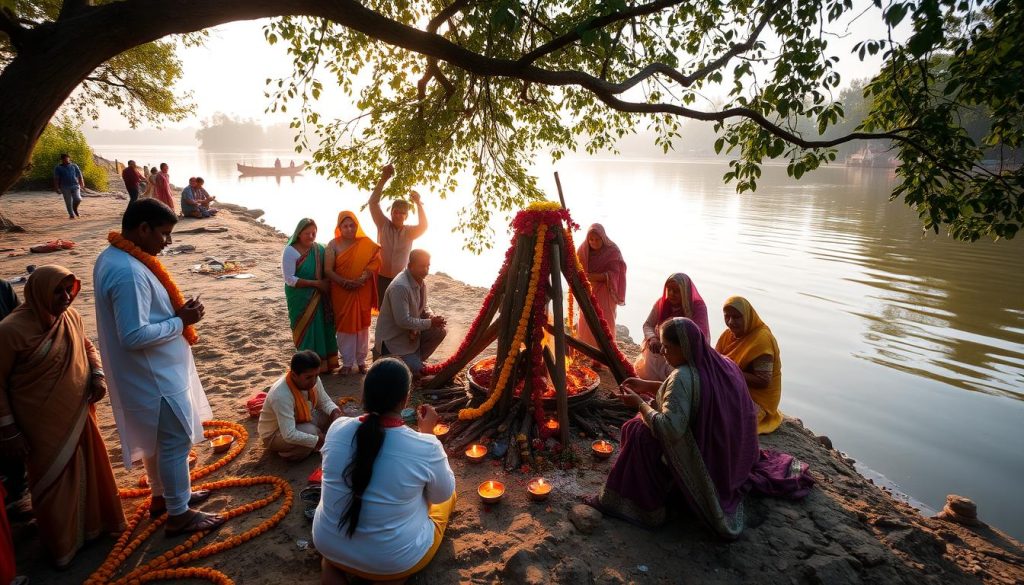
Prayers and mantras are very important at a Hindu funeral. They help comfort the departed soul. Family and friends gather to chant these holy words. This creates peace, helping the soul move to the afterlife.
The Role of the Eldest Son
In Hinduism, the eldest son has a big role at funerals. He leads and does important rites, like lighting the fire. This signifies the soul's release and shows the son taking on new duties.
The Open Casket Tradition
An open casket lets loved ones say goodbye. It brings a sense of closure. People place offerings or personal notes in the casket. This honours the person's life and shows deep love and respect.
| Ritual | Significance | Common Practices |
|---|---|---|
| Prayers and Mantras | Comforting the soul, aiding transition | Chanting, holy water from the Ganges |
| Role of the Eldest Son | Leading funeral rites, transfer of duties | Lighting pyre, performing key rituals |
| Open Casket Tradition | Final farewell, communal grief | Placing personal tributes, symbolic offerings |
The Cremation Process
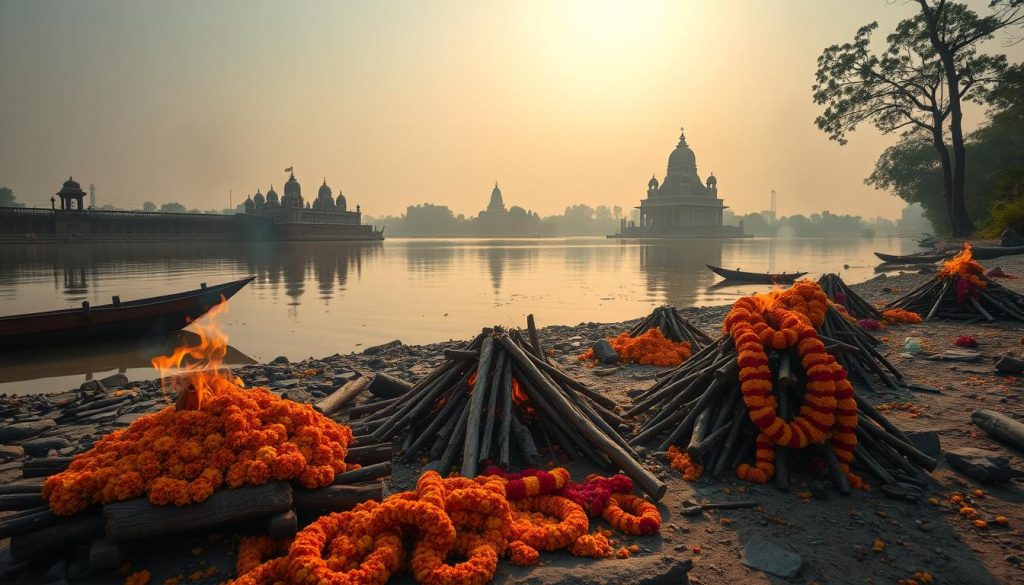
Cremation is very important in Hinduism. It means the soul gets cleaned by fire. This is a key part of Hindu funerals and comes with many old traditions.
The Significance of Cremation in Hinduism
Hindus think cremation helps the soul leave the body. This lets the soul be reborn. This idea comes from old texts and helps the soul find peace.
Conducting the Mukhagni Ceremony
The mukhagni ceremony is essential in Hindu farewells. The eldest son usually starts the fire. This fire is meant to help the soul start over.
During this ceremony, people say special words, put ghee on the body, and offer things to the fire god, Agni. The fire can be made of different things, depending on what the family can provide or afford.
Local Cremation Practices
Cremation customs can change based on local rules. Now, electric crematoriums are popular. They're clean and save fuel. But many still follow old ways, preparing the body carefully for the ceremony.
Bodies might be placed differently based on if they're male or female. They are taken near water, showing life's flow. Burning takes 3 to 4 hours. The ashes are often put in a holy river, showing life and death are a cycle.
Post-Cremation Practices
After cremation, some key practices help the soul find peace. Ashes are scattered in sacred waters. This symbolises the soul's freedom. It's a significant ritual to keep a link with those who have left us.
- Scattering ashes, known as Asti Visarjan, in rivers like the Ganges.
- Conducting mourning rituals for 13 days, including bathing, wearing new clothes, and cleaning the house.
- Using biodegradable urns that dissolve in water, ensuring an eco-friendly approach.
Hindus perform ceremonies quickly after death. They usually cremate within 24 to 48 hours. This shows a need to respectfully manage the physical remains. But, people outside India sometimes have to adjust. They must follow local rules for cremation and spreading ashes.
There is a special ceremony 13 days after someone dies. It helps the soul move on. A year later, a memorial service happens. It includes chanting, prayers, and reading scriptures. This keeps the family connected and honours the soul's forever journey.
The cost of cremation changes a lot. It depends on what the family wants. A simple cremation might be cheap. But a full service can cost a lot more. Yet, the spiritual meaning is always the same. It goes beyond money.
Hindu funeral customs come from a major world religion. They show respect and honour for the departed. Following these customs celebrates life and guides the departed with dignity.
Traditional Mourning Period and Rituals
The traditional mourning period in Hinduism is deep. It brings families together. It helps with spiritual cleansing and honours the departed soul's journey.
This time is filled with rituals and ceremonies. They show respect and remembrance by the community.
The 10-Day Mourning Period
The 10-day mourning period is central to Hindu funeral rites. It's a time for solemn reflection and spiritual cleansing. Family members perform rites to purify themselves and help the departed soul.
They offer rice balls (pindas) to ancestors and say daily prayers. The community shares their grief. The household stays quiet, which helps everyone reflect.
The Preta-Karma Ceremony
The Preta-Karma ceremony happens on the 13th day. It's key for the soul's journey to the next world. The ceremony includes special offerings. It supports the soul's journey.
This time brings family and friends closer. They share rituals and strengthen their bonds.
Here are key aspects of the 10-day mourning period:
- Daily offerings and prayers.
- A focus on spiritual cleansing and reflection.
- Subdued household atmosphere.
And critical elements of the Preta-Karma ceremony:
- Offerings that symbolise nourishment for the soul.
- Aid in the soul's journey to the next realm.
- Strengthening of communal and familial bonds.
| Tradition | Description |
|---|---|
| 10-Day Mourning Period | A period of solemn reflection and spiritual cleansing. |
| Preta-Karma Ceremony | A pivotal ritual aiding the soul's journey to its heavenly abode. |
| Community Involvement | Family and friends unite to honour the deceased collectively. |
This shows Hinduism's deep respect for life's cycle and the journey beyond. Mourning is personal and together. It's a time for self-thought, community, and rising spiritually.
Hindu Funeral Etiquette
It's very important to know how to act at Hindu funerals. This shows respect and honors one of the oldest religions in the world. It has nearly a billion followers. In the United Kingdom, there are more than 600,000 Hindus. They are the third-largest faith group. Learning about funeral etiquette is essential.
Proper Attire for Mourners
At Hindu funerals, people wear white instead of black. White stands for purity and the start of the deceased's new journey. Many families in Britain choose cremation, like in Hindu traditions. Wearing white shows the belief in returning to purity.
Offering Condolences
When offering condolences, it's important to be empathetic but also give the family space. Relatives and friends visit the family's home for 10 to 30 days. Sending flowers is okay, even though it's not a traditional Hindu practice. This shows the family you care and supports them during this tough time.
Participation Expectations
Being part of a Hindu funeral means joining in prayers and mantras. These are key to the ceremony, which is usually under 30 minutes. The family prays by the body but doesn't touch it. Touching is seen as impure. There are special rituals, often led by the family priest.
A lamp is lit near the deceased's head. People offer prayers and sing hymns. Knowing and doing these things shows deep respect. It also honors the family's beliefs and the depth of Hindu funeral traditions.
Conclusion
Hindu funerals are more than saying goodbye. They connect life, death, and rebirth. We've learned that these funerals have three key parts. These are preparing the body, doing the rituals, and cremation. Each step helps the soul go from our world to a peaceful, spiritual place.
The customs, like burning the body and saying special prayers, help families feel better. They give peace to the one who has died too. The main family members lead these customs. This shows their love and brings everyone closer. Families remember the person who died in ceremonies for up to thirty days. This helps the soul on its journey.
By following these traditions, we show respect and get closer to others and the universe. Doing these rituals helps people who are sad and remembers the wisdom of the past. By being part of these sacred actions, we keep our connection strong. We see life as a cycle. Hindu funerals remind us we're all connected, giving comfort and understanding of our universe.
FAQ
How do we understand Hindu beliefs about death?
Hindus see death as a key part of a spiritual journey. It's tied to karma. Funeral rites help the deceased get a good start for their next life.
What is the concept of reincarnation and karma in Hinduism?
Reincarnation means the soul gets a new body after death. Karma is about our actions and their effects, which shape our future and next life.
What role do funeral rites play in Hinduism?
Funeral rites are important for the soul’s journey to a better place. They involve chants and offerings. This shows respect and support from the community.
How is the body prepared for a Hindu funeral?
The body is washed with holy items like milk and honey to cleanse it. Then, it's dressed up and surrounded by offerings.
Why is selecting a suitable venue important for a Hindu funeral?
A peaceful place is needed for undisturbed rituals. The right venue helps honor traditions and supports the grieving family and friends.
What is the significance of having a Hindu priest or officiant?
A knowledgeable priest leads the family through the rites. They make sure all religious steps are followed, honouring the deceased's journey.
What is the importance of prayers and mantras during the Hindu funeral ceremony?
Prayers and mantras help the deceased's soul and comfort the family. They are key for ritual and emotional support.
What role does the eldest son play in a Hindu funeral?
The eldest son leads the ceremony and rites. This shows the passing of duties within the family, a deep tradition.
What is the tradition of an open casket during a Hindu funeral?
An open casket lets everyone say goodbye. It helps with closure and sharing the loss and respect together.
Why is cremation significant in Hinduism?
Cremation frees and cleanses the soul. The mukhagni ritual with the funeral pyre is vital for rebirth.
What are the local practices for cremation in the UK?
Following local laws is key, respecting both faith and public duties. It makes sure the cremation is done respectfully.
What are the post-cremation practices in Hindu funerals?
Ashes are scattered in sacred water. This and more rites help the soul move on smoothly to its next life.
What is the significance of the 10-day mourning period in Hinduism?
This time is for reflection and purifying. Family does rites to clean their spirit and support the departed soul.
What is the preta-karma ceremony?
On the 13th day, this ceremony helps the soul go to heaven. It also strengthens family and community ties.
What is appropriate attire for mourners at a Hindu funeral?
Wear white, not black. White means purity and mourning in Hindu culture.
How should condolences be offered at a Hindu funeral?
Give your sympathies kindly and respectfully. Any small act of support means a lot during this hard time.
What are the participation expectations at a Hindu funeral?
Knowing what to do, like seeing the body and praying, shows respect. It also honors Hindu funeral ways.